
 24/7 Help
 Sign In
 Cart
 Free Express Post*
 Free Gifts with All Orders
 Guaranteed Delivery
What Is a Weed Grinder and Do You Need One

If you use cannabis, you have likely heard the term weed grinder. You may already own one, or you may be wondering if you actually need it. Some people still break up cannabis by hand. Others swear they would never go back after using a grinder.
This guide explains what a weed grinder is, how it works, and whether it makes sense for your routine. You will also learn how to grind weed properly, the different grinder types, and how to choose the best weed grinder for your needs.
This article is written for Canadian cannabis consumers who want clear, honest information before making a decision.
What Is a Weed Grinder?
A weed grinder is a small tool used to break cannabis flower into smaller, even pieces. These pieces are easier to smoke, vape, or roll into joints.
Most grinders are round and fit in your hand. Inside, they have sharp teeth that shred the cannabis when you twist the grinder halves together.
When people say “grinder weed,” they are usually talking about cannabis that has already been ground and is ready to use.
Why Grinding Cannabis Matters
Grinding cannabis is not just about convenience. It affects how your cannabis burns, tastes, and feels.
According to Leafly, evenly ground cannabis burns more consistently and helps prevent wasted flower due to uneven airflow during smoking or vaping (Leafly, 2023).
How Does a Weed Grinder Work?
A standard weed grinder has at least two parts:
- Top chamber – where you place the cannabis flower
- Grinding teeth – sharp edges that break apart the bud when twisted
When you rotate the grinder, the teeth tear the flower into smaller pieces. Gravity pulls the ground cannabis into the lower chamber.
Some grinders have extra sections that collect fine crystals called kief, which contain cannabinoids and terpenes.
What Is Kief?
Kief is the powdery resin that falls off cannabis buds. It is rich in THC and other cannabinoids. Many people save kief to sprinkle into bowls or joints.
Health Canada explains that cannabinoids are the compounds responsible for cannabis effects, including THC and CBD (Health Canada, 2022).
Types of Weed Grinders
Not all weed grinders are the same. Each type has pros and cons depending on how you use cannabis.
Two-Piece Grinders
These are the simplest grinders. They have a top and bottom section with teeth.
They are easy to use and easy to clean. However, they do not collect kief or store ground cannabis.
Three-Piece Grinders
A three-piece grinder includes a chamber to catch ground cannabis.
This makes it easier to prepare weed ahead of time.
Four-Piece Grinders
Four-piece grinders are the most common choice today.
They include:
- A grinding chamber
- A collection chamber
- A fine screen
- A kief catcher
If you want to save kief, this type is often considered the best weed grinder for regular users.
Electric Weed Grinder
An electric weed grinder uses a motor instead of manual twisting. You press a button, and the grinder does the work.
Electric grinders can be helpful if you:
- Have limited hand strength
- Grind weed often
- Want faster results
According to a review published by High Times, electric grinders can provide consistent results but may grind cannabis too finely for some users (High Times, 2023).
What Materials Are Weed Grinders Made From?
Weed grinders come in several materials. Each one affects durability, price, and performance.
Metal Grinders
Metal grinders are usually made from aluminum or stainless steel.
They are durable and long-lasting. Many people prefer metal because the teeth stay sharp over time.
Plastic Grinders
Plastic grinders are lightweight and affordable.
However, they can wear down faster. Some studies have raised concerns about plastic particles breaking off during use (Canadian Journal of Public Health, 2020).
Wooden Grinders
Wooden grinders look natural and simple.
They usually do not have kief catchers. Performance depends on build quality.
How to Grind Weed Properly
Learning how to grind weed correctly can improve your experience and help you avoid common mistakes.
Step-by-Step Guide
- Break larger buds into smaller pieces by hand
- Remove any visible stems.
- Place the flower loosely into the grinder.r
- Do not overfill the grinder.r
- Twist gently until the grind feels even.
Over-grinding can turn cannabis into powder. This may restrict airflow and affect flavour.
According to Vaporizer Wizard, medium-coarse grinds work best for most dry herb vaporizers (Vaporizer Wizard, 2023).

Do You Need a Weed Grinder?
Whether you need a weed grinder depends on how you use cannabis.
When a Grinder Makes Sense
A weed grinder is helpful if you:
- Roll joints or blunts
- Use a dry herb vaporizer.r
- Want even burns
- Prefer consistent dosing
Grinding by hand often leads to uneven pieces. This can cause harsh hits and wasted cannabis.
When You Might Skip a Grinder
You may not need a grinder if you:
- Only use pre-rolls
- Use cannabis rarely
- Prefer hand-breaking for personal reasons.
Still, many users find that once they start using a grinder, they do not want to stop.
Weed Grinder vs Grinding by Hand
Grinding cannabis by hand may seem simple, but it has drawbacks.
Hand Grinding Issues
- Uneven size
- Sticky fingers
- Lost trichomes
- Slower process
A weed grinder reduces mess and preserves more cannabinoids by keeping trichomes contained.
A study published in the Journal of Cannabis Research found that mechanical grinding results in more consistent particle size compared to manual methods (JCR, 2021).
How a Weed Grinder Affects Flavour and Potency
Grinding cannabis helps expose more surface area.
This allows for better airflow and more even heating. As a result, cannabinoids and terpenes vaporize or burn more efficiently.
Terpenes are the compounds responsible for cannabis aroma and flavour. According to Health Canada, preserving terpenes can influence the overall experience (Health Canada, 2022).

Choosing the Best Weed Grinder for You
The best weed grinder depends on your lifestyle and preferences.
Ask yourself:
- How often do you use cannabis
- Do you want to collect kie
- Do you prefer manual or electric
- Is portability important
A four-piece metal grinder is a popular starting point for many Canadian consumers.
Cleaning and Maintaining Your Weed Grinder
A clean grinder works better and lasts longer.
Basic Cleaning Tips
- Empty the grinder regularly
- Use a soft brush for kief screens.
- Clean with isopropyl alcohol when sticky
- Let it dry fully before use
According to Weedmaps, regular cleaning prevents buildup that can affect grind quality (Weedmaps, 2023).
Legal Considerations in Canada
Weed grinders are legal in Canada.
Under the Cannabis Act, cannabis accessories such as grinders are permitted for adult use (Government of Canada, 2018).
Always store cannabis and accessories safely and away from minors.
Where to Buy a Weed Grinder in Canada
Many Canadians buy grinders online for convenience and selection.
When shopping, look for:
- Clear product descriptions
- Material details
- Customer reviews
- Canadian shipping
If you are already shopping for cannabis, browsing accessories on the same site can save time.
Final Thoughts on Weed Grinders
A weed grinder is a simple tool that can improve your cannabis routine. It helps you grind weed evenly, preserve flavour, and reduce waste.
You do not need the most expensive option. A well-made grinder that fits your habits is usually enough.
If you are exploring cannabis products and learning more about accessories, visiting a trusted Canadian dispensary like Get Kush can help you find both quality flower and the tools to use it properly.
References:
Government of Canada (Health Canada) – n.d. – Regulations Supporting the Cannabis Act – Canada.ca. Available at:
Delusion Smoke – n.d. – How a Weed Grinder Can Enhance the Flavour and Potency of Your Cannabis – Hashnode. Available at: https://delusionsmoke.hashnode.dev/how-a-weed-grinder-can-enhance-the-flavor-and-potency-of-your-cannabis
Weedmaps – n.d. – How a Weed Grinder Works – Weedmaps. Available at:
https://weedmaps.com/learn/products-and-how-to-consume/how-weed-grinder-works
Dr. Leslie Lars Iversen, CBE FRS MAE
If you use cannabis, you have likely heard the term weed grinder. You may already own one, or you may be wondering if you actually need it. Some people still break up cannabis by hand. Others swear they would never go back after using a grinder. This guide explains what...
Weed Pipes vs. Bongs: What’s the Difference?
Weed Pipes vs. Bongs: What’s the Difference?
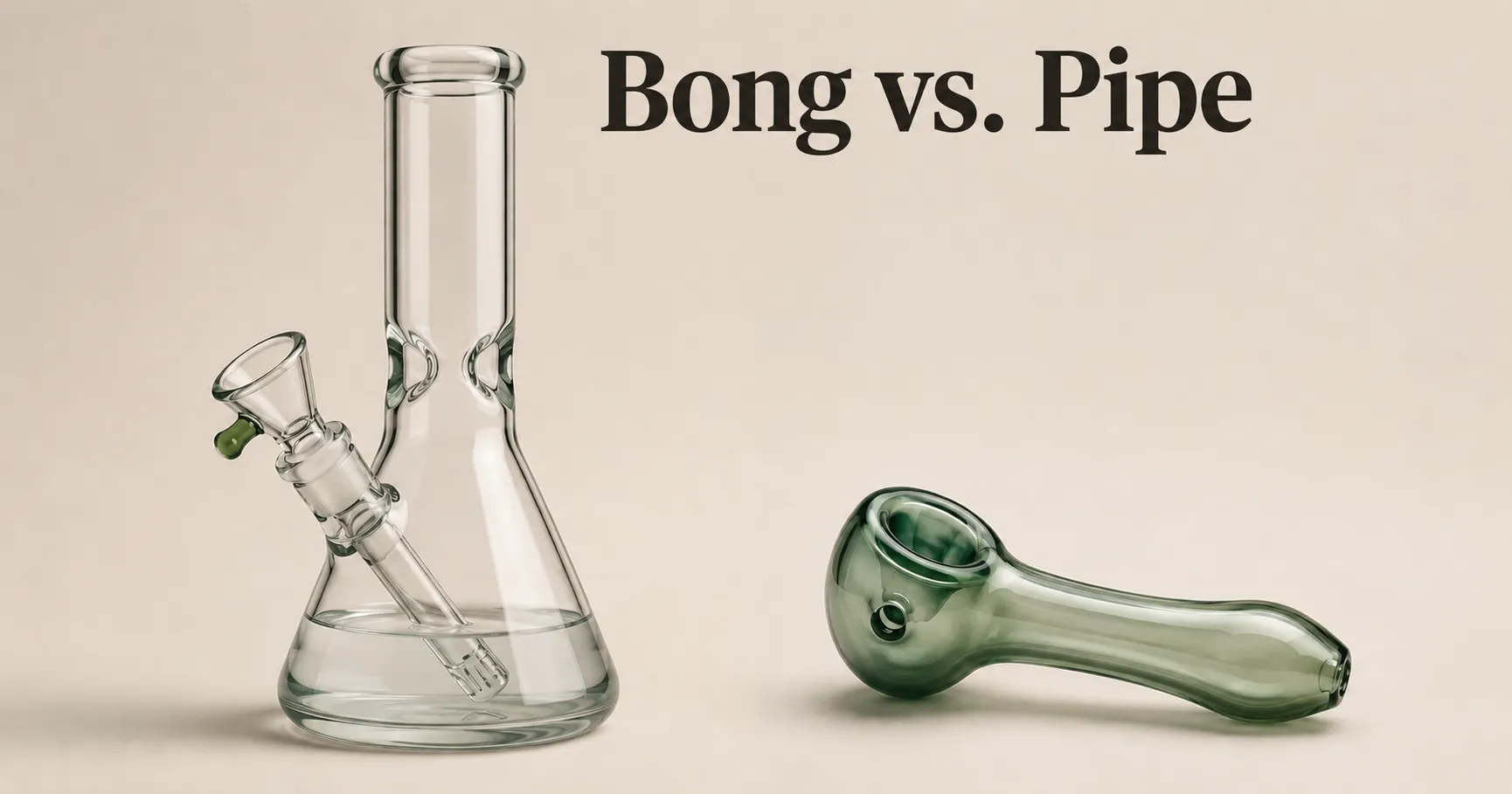
When you shop for cannabis accessories, you’ll notice that weed pipes and bongs are two of the most common tools for smoking weed. Both help you enjoy dried cannabis flower, but they work differently and create different experiences.
If you’re new to cannabis or just want to understand the pros and cons of each, this guide will walk you through everything you need to know. We’ll look at how each device works, what they’re best for, and how to choose the right one for your needs.
This guide is written for beginners and experienced smokers alike. The goal is to help you make an informed choice the next time you visit Get Kush, Canada’s trusted online dispensary.
What Is a Weed Pipe?
A weed pipe—often called a bowl or hand pipe—is a small handheld device used to smoke cannabis.
It usually has three parts:
- The bowl: where you pack your cannabis
- The mouthpiece: where you inhale
- The carb (optional): a small hole that helps control airflow
Weed pipes are simple, portable, and easy to use. You place cannabis in the weed bowl, light it, cover the carb (if there is one), and inhale. When you release the carb, fresh air rushes in and clears the smoke.
Most pipes are made from glass, but you can also find wood, silicone, and metal options.
What Is a Bong?
A bong is a water-filtration device used for smoking cannabis. Many people call it a “water pipe.”
A bong has several parts:
- The bowl: just like a pipe, this is where you pack your flower
- The downstem: a tube that carries smoke into the water
- The water chamber: where the smoke gets filtered
- The mouthpiece: where you inhale
When you light the bowl, the smoke travels down through the water and into your mouth and lungs. The water cools the smoke, making hits smoother and easier to inhale.
How They Work: The Key Differences
Both devices help you smoke dried cannabis. But they work in very different ways.
1. Airflow and Filtration
A weed pipe offers direct airflow. Smoke moves straight from the bowl into your lungs.
A bong, on the other hand, uses water to filter and cool the smoke. This extra step makes bong hits smoother but also stronger.
2. Size and Portability
Pipes are small, lightweight, and easy to carry. You can put one in your pocket, bag, or drawer without any trouble.
Bongs are larger and more fragile. They’re designed for home use rather than portability.
3. Smoke Strength
Because smoke is cooled, you may inhale more from a bong than you expect. That means bong weed often hits harder than a pipe.
A pipe offers smaller, more controlled hits.
4. Learning Curve
Pipes are straightforward: pack, light, inhale.
Bongs take a little more practice. You need to learn how to clear the chamber, manage the bowl, and balance the airflow.
5. Cleanup and Care
Pipes are easy to clean. Most only require a quick rinse and some cleaning solution.
Bongs need more maintenance. The water must be changed often, and the extra parts require regular cleaning to prevent buildup.
When to Choose a Weed Pipe
A weed pipe may be the right choice for you if you want something small, quick, and simple.
You Prefer Portability
If you want something you can keep in your pocket or take with you outdoors, a pipe is ideal.
You Enjoy Smaller, Controlled Hits
For beginners or people who prefer lighter smoke intake, a pipe is easier to manage.
You Want a Low-Maintenance Option
Pipes require less cleaning and fewer accessories. They’re often more durable as well.
You Want Affordable Cannabis Accessories
Most pipes cost less than bongs, making them a budget-friendly option if you’re just starting.
When to Choose a Bong
A bong may be the better choice if you’re looking for smoother, cooler smoke.
You Want a Smoother Inhalation Experience
The water helps remove harshness. If pipes feel too hot or rough, a bong may solve the issue.
You Want Bigger Hits
Because smoke is cooled and filtered, you can inhale more at once. This results in stronger effects.
You Enjoy Smoking at Home
Bongs are perfect for relaxed sessions where you’re not rushing or on the go.
You Appreciate Customization
You can upgrade parts like:
- Bowls
- Downstems
- Ash catchers
- Percolators
This helps you tailor the bong to your preferred experience.

Comparing Weed Pipes vs. Bongs
Below is a simple comparison to help you choose:
| Feature | Weed Pipe | Bong |
| Filtration | None | Water filtration |
| Smoothness | Harsher | Much smoother |
| Hit Size | Smaller | Larger |
| Portability | Very portable | Not portable |
| Maintenance | Low | Medium |
| Cost | Lower | Higher |
| Learning Curve | Easy | Moderate |
Which One Is Better for Beginners?
Both work well for beginners, but the choice depends on your comfort level.
If you want gentle, beginner-friendly hits, a weed pipe is simpler and easier to control.
If you want smoother smoke right away and don’t mind a little practice, a bong creates a more comfortable experience.
Some beginners prefer to start with a pipe and switch to a bong later.
Which One Gets You Higher?
A bong can create stronger effects because you inhale more smoke at once.
A pipe delivers smaller hits, which may mean milder effects.
However, how high you feel depends on other factors too, including:
- Your cannabis strain
- THC levels
- Your tolerance
- How deeply you inhale
Research published in the Journal of Chemistry found that water pipes deliver more cannabinoids per hit because they allow for larger inhalations (Hama et al., “Analysis of Cannabis Smoke,” Journal of Chemistry).
How to Use a Weed Pipe Properly
If you’re new to pipes, here’s how to get started:
- Grind your cannabis.
- Pack the weed bowl lightly.
- Hold the pipe with your thumb over the carb (if your pipe has one).
- Light the bowl gently.
- Inhale slowly.
- Release the carb to clear the smoke.
Start with small hits. Pipes can feel harsh at first, so go slow.
How to Use a Bong Properly
Using a bong takes a few more steps, but the process becomes easy with practice.
- Fill the water chamber.
- Insert the downstem and bowl.
- Pack the bowl with ground cannabis.
- Place your mouth on the mouthpiece.
- Light the cannabis while inhaling slowly.
- Let smoke fill the chamber.
- Remove the bowl and inhale fully to clear the smoke.
Keep the water clean. Dirty water affects taste and smell.
Materials: Glass, Silicone, Metal, and More
Both pipes and bongs come in different materials. Each offers unique benefits.
Glass
Most common, great flavour, easy to see buildup.
Silicone
Durable, portable, and almost impossible to break.
Metal
Strong and long-lasting, but it can affect the flavour.
Wood
Natural look and feel, but harder to clean.
For the cleanest flavour, glass is usually the best choice.

Health Considerations
Any smoke—whether from a pipe or bong—contains irritants. According to the Canadian Centre on Substance Use and Addiction, smoking cannabis can affect your respiratory system, especially with frequent use (CCSA, “Cannabis Smoke and Lung Health”).
Water filtration may cool and filter the smoke, but experts note that it does not eliminate harmful byproducts. This means:
- A bong may feel smoother
- But it does not make smoking “safe.”
If you want a smoke-free alternative, consider Cannabis edibles or vaporizers.
Cost Differences
Weed pipes are usually more affordable. Many cost less than $20–$40.
Bongs start at around $40 and can climb into the hundreds, depending on size and features.
If you’re on a budget, pipes are a great starting point. If you’re ready to invest in smoother sessions, a bong is worth considering.
Which Should You Choose?
Choosing between a weed pipe and a bong depends on what matters most to you.
Choose a weed pipe if you want:
- Something small
- Simple use
- Lower cost
- Quick hits
- Easy maintenance
Choose a bong if you want:
- Smooth, cool hits
- Bigger clouds
- Better filtration
- A more comfortable experience
You can also own both. Many cannabis consumers keep a pipe for convenience and a bong for at-home enjoyment.
Care and Cleaning Tips
Keeping your pipe or bong clean helps improve flavour, airflow, and safety.
Cleaning a Weed Pipe
- Use a cleaning solution made for glass
- Rinse with warm water.
- Let it dry completely before using.g
Cleaning a Bong
- Empty and replace the water daily
- Clean resin buildup weekly
- Use coarse salt and isopropyl alcohol to scrub tough spots
- Rinse well to remove any cleaning residue.
Dirty bongs can grow bacteria, so regular cleaning is important.
Final Thoughts
Both weed pipes and bongs are great tools for smoking weed, but each one offers a different experience. Pipes are simple, portable, and perfect for everyday use. Bongs offer smooth, powerful hits and a more comfortable inhale.
If you want to discover premium cannabis products, high-quality accessories, and fresh strains, visit Get Kush, Canada’s trusted online cannabis dispensary. We carry a wide range of pipes, bongs, and other cannabis accessories to help you enjoy your cannabis your way.
Whether you prefer quick sessions with a weed pipe or bigger, cooler hits from a bong, the right tool can make your cannabis experience better, smoother, and more enjoyable.
References:
Dockside Cannabis. How to Clean Your Pipe or Bong. Available at:
https://www.docksidecannabis.com/dockside-blog/how-to-clean-your-pipe-or-bong/
Stanford Medicine. Pipes and Bongs: Health Effects and Risks. Available at:
https://med.stanford.edu/content/dam/sm/cannabispreventiontoolkit/documents/HealthEffects/MethodsofUse/Pipes-Bongs.pdf
NuggMD. Bong vs. Pipe: Which Is Better? Available at:
https://www.nuggmd.com/blog/bong-vs-pipe-which-is-better
Dr. Leslie Lars Iversen, CBE FRS MAE
When you shop for cannabis accessories, you’ll notice that weed pipes and bongs are two of the most common tools for smoking weed. Both help you enjoy dried cannabis flower, but they work differently and create different experiences. If you’re new to cannabis or just want to understand the pros...
All You Need to Know About Rick Simpson Oil
All You Need to Know About Rick Simpson Oil

Rick Simpson Oil (or RSO for short) is one of the most versatile and highly praised innovations in cannabis you are ever likely to hear about. This widely acclaimed oil was created by a Canadian scientist named (you guessed it) Rick Simpson, who also happens to be an engineer and cannabis advocate. Rick became a staunch supporter of CBD oil following a work accident that led to health issues.
As a result of these health problems, Rick sought various solutions to alleviate the pain, one of which was cannabis extract.
The story goes that he was able to solve his health issues with cannabis oil, now commonly referred to as RSO, which is basically a cannabis extract similar to tar. RSO comes in concentrated, edible, and topical forms. According to advocates (of which there are many), there are very few things it allegedly can’t do and many things it supposedly can do for both medical patients and recreational users alike – again, according to supporters of Rick Simpson oil.
Of all the alleged conditions RSO is alleged to help with, chief amongst them is the remarkable assertion that various types of cancer can not only be treated but, in some cases, even cured.
THC Content
RSO is unique from a lot of regular cannabis products and oils because it contains far higher levels of tetrahydrocannabinol (also known as THC), which is the main psychoactive within the cannabinoids in marijuana and, ultimately, the component that gets people “high.”
Most other therapeutic cannabis oils are usually composed of cannabidiol (CBD) and contain little to no THC whatsoever. Conversely, RSO goes to the other extreme and contains huge amounts of it.
It is worth noting that Rick Simpson doesn’t actually sell RSO, thus removing himself from any claims that may exist along the lines of him being a ‘snake oil’ salesman. It should also be noted that Rick Simpson is a highly educated man of science who simply believes in RSO and encourages people to make their own using his methods.
Wide Range Of Treatments?
According to Rick Simpson’s own website, his version of the oil is produced with a specific type of cannabis called Cannabis indica, which delivers a sedative effect that (apparently) helps the body heal.
In addition to helping with cancer, RSO is also said to help treat the following:
- Asthma
- Depression
- High blood pressure
- Inflammation
- Infections
- Insomnia
- Multiple sclerosis
So, is there any truth to the benefits of this interesting creation, and does it really help, at least in a quantifiable medical sense? GetKush has unturned every stone (no pun intended) to get to the bottom of this so-called miracle potion and find the answers you need. This is a subject we happen to know a thing or two about, but as Canada’s leading online cannabis dispensary, you wouldn’t expect any less, would you?
Read on as we take a look at everything you need to know about RSO.
Rick Simpson’s Story
Back in 1997, Rick Simpson worked as an engineer in Canada. Due to a nasty work accident, he suffered from constant headaches and tinnitus, which, despite several hospital tests and prescribed medications, he never truly managed to escape from. The pain was relentless, unmitigated, and unforgiving.
After watching a television program on medical cannabis in 1999, he tried marijuana and, just like many others, was delighted with the relief it provided. He went to his doctor to ask for a prescription for medical cannabis, but his request was denied.
Again, this is the late nineties, when cannabis products were still viewed with huge skepticism in the medical community. To that end, the use of Cannabis for pain relief was considered extremely leftfield. The only way to truly explore the option of cannabis as a pain relief would be to do so himself.
Unrelenting Pain
The symptoms of his illness worsened to the point where he could no longer lead a normal life. Tired of the lack of any real solution and after reading something about the potential healing benefits of THC and CBD, he decided to find an alternative healing method himself. Subsequently, he grew cannabis plants, before making an oil extract from the flowers.
He took the oil daily, and according to his statements, he felt better day by day. At first, his sleep improved, but then he noticed his pain and blood pressure were gradually reduced. Slowly but surely, he returned to a normal life.
But then tragedy struck, in the form of a 2002 basal cell carcinoma diagnosis – the most common form of skin cancer. He underwent surgery a year later, but then barely a few weeks after the operation, the tumour was present once again. After the failure of conventional treatments, Simpson relied on his now eponymous cannabis oil, the Rick Simpson Oil. He applied it directly to his affected skin, hoping the oil would help.
It certainly did. So much so, in fact, that he claims his melanoma disappeared after just four days.
Testing Patients
Enthusiastic about his success, he gave his oil to more than 5,000 people, according to his statements, who suffered from various types of cancer, leukemia, diabetes, high blood pressure, chronic pain, and viral or bacterial infections.
This was Simpson’s very own unapproved but effective and well-organized medical test, hoping to see if his cure was a one-time ‘lucky fluke’ or if there was indeed any merit to the oil.
He claimed to have achieved a success rate of 70% and was able to improve the quality of life of patients, even if it was already too late for the disease to be cured. Either way, his test – while unofficial and without proper governing supervision – was an incredible success with laudable results.
What Exactly Is Rick Simpson Oil?
Simpson created a cannabis oil that has a very high concentration of THC, approximately 80-90% in fact. His oil contains the full plant extract, which can be taken orally or applied topically.
Obviously, there are some finer nuanced details in play here, but to address the technique in creating RSO using layman’s terms, the oil is basically extracted Using a solvent which, in turn, releases the cannabinoids. The most common solvent used to make RSO is essentially just grain alcohol, ethanol, or butane.
After some time, the alcohol is strained from the remaining plant material. This plant mixture is then heated until the remaining alcohol evaporates, leaving behind a dark-coloured cannabis oil with a thick consistency. RSO is actually quite famed for its tar-like look and feel.
The process isn’t particularly complicated, and the recipe for making the oil can be found on Rick Simpson’s website. He recommends a high dosage of up to one gram daily for a duration of two months in order to address common ailments or even diseases. It is worth noting, however, that there is no official medical research in support of RSO, and all results are purely anecdotal.
It is also worth noting that despite the relative ease with which RSO can be made at home, if you would prefer to avoid the trial and error usually associated with this kind of thing, we do have RSO available right here, should you prefer the more convenient option of buying it – instead of concocting it in your kitchen!
What Does Science Say About Rick Simpson Oil?
So far, hundreds of scientific studies have been published on cannabinoids and cancer, but these studies have not found enough evidence to support the claim that cannabis is a safe and effective cancer treatment. However, research is ongoing. Thousands of scientists are investigating the potential of cannabinoids for cancer and other diseases as part of the International Cannabinoid Research Society.
A growing number of people, many of whom are respected in their various scientific fields, state that there is solid evidence pointing towards cannabis helping with cancer symptoms (at the very least) or even curing cancer completely (at the very most).
In fairness, however, the claim that there is solid evidence that cannabis can cure cancer is misleading and scientifically unproven. This is because almost all studies have been conducted in the laboratory or in animal experiments. While they are an essential part of research and can provide hints about the benefits of certain treatments, without human studies, the effectiveness of cannabis against cancer cannot be proven.
The best results from laboratory studies have so far been achieved with a combination of highly pure THC and cannabidiol (CBD), a cannabinoid that occurs in cannabis plants and counteracts the psychoactive effects of THC. There have been fascinating results from laboratory experiments that investigated various types of cancer, including brain tumours, prostate, breast, lung, and pancreatic cancer.
Anecdotal Evidence
While it is true that there may be limited scientific evidence to support the effectiveness of cannabis in treating cancer, there is a growing body of anecdotal evidence that suggests it can be beneficial for some (but certainly not all) patients.
Many cancer patients have reported that cannabis helped them manage symptoms such as pain, nausea, and anxiety, and some have even claimed that it helped shrink their tumours entirely. Although these reports are not scientifically validated, they cannot and certainly should not be dismissed outright.
With more and more patients turning to cannabis for relief, it is important for the medical community to take a closer look at the potential benefits of this plant for cancer treatment. While further research is needed, it is clear that cannabis – and RSO in particular – has the potential to provide significant relief for cancer patients and improve their quality of life.
In other words, the waters are quite muddy in this regard because opinion is divided. There seem to be very few people sitting on the fence when it comes to this topic, with most people either staunchly for RSO in cancer treatment or staunchly against.
Either way, it would be fair to say one thing; cannabis is (generally speaking) quite a harmless substance with many established benefits, and so it might be fair to argue that it certainly can’t do any harm and might be worth trying, in addition to prescribed medicines. The decision, as always, should be left to the patient. Get Kush neither condones nor dismisses the notion of using RSO as a medical solution.
Is It Worth It?
So, should you try RSO as a means to treat cancer? The bottom line is that it is not our place to say. While thousands of people believe in the RSO formula – and it has been around for close to three decades already – the success of using RSO to treat any ailment or illness is anecdotal only.
That said, the anecdotal evidence is very strong indeed, and while we would never encourage anyone to use RSO as a sole treatment, we would suggest that, at the very least, it is worth investigating.
Subject of Debate
When it comes to alternative cancer treatments, Rick Simpson Oil (RSO) has generated quite a buzz. Made from cannabis and touted by its creator as a miracle cure, it’s no surprise that people are curious – especially in light of the fact
that he isn’t actually selling anything here, and this is quite an educated man we are talking about. But before you start making your own RSO, there are some important things to consider.
First off, let’s talk about the side effects. THC, the psychoactive substance in cannabis, can cause a range of psychological and physical symptoms to various degrees, and if you have never taken cannabis before, it can be something of a shock. From paranoia and anxiety to low blood pressure and bloodshot eyes, the list is quite extensive.
But the good news is, these side effects are typically short-lived and don’t pose any major health risks, and remember, there is a reason cannabis is so popular worldwide. Most people enjoy the effects.
Interesting But Unproven
The main area of concern with RSO lies in its purported cancer-fighting properties. While there are anecdotal reports of success, there simply isn’t enough scientific evidence to support the idea that RSO is indeed a cure for cancer. This can be especially dangerous if someone foregoes conventional treatments recommended by their doctor in favour of RSO.
Also, while the process is quite simple for those who are experienced with cannabis, making your own RSO is a complicated and potentially dangerous process. The other consideration is that obtaining the necessary amount of marijuana is illegal in many areas, and the process itself involves using solvents that can cause explosions if not handled properly. In addition, these solvents can leave behind a cancer-causing residue if not disposed of correctly.
Again, with that in mind, a far better solution would be to grab RSO off the shelf and negate these concerns in the process.
The Bottom Line
So, what exactly can you take from all of this? Essentially, If you are considering using RSO for cancer, it’s important to keep up with any other treatments recommended by your doctor. And if you live somewhere that allows medical marijuana, consider seeking advice from a dispensary on how to obtain a pre-made oil.
While RSO may seem like a promising alternative, as with anything in life, it is crucial to weigh the risks and benefits carefully before making any decisions.
Rick Simpson Oil (or RSO for short) is one of the most versatile and highly praised innovations in cannabis you are ever likely to hear about. This widely acclaimed oil was created by a Canadian scientist named (you guessed it) Rick Simpson, who also happens to be an engineer and...
What is Grabba Leaf?
What is Grabba Leaf?

Many all-natural smoke lovers are learning about the gift of Grabba leaf. Also known as Fronto of Fanta, Grabba leaf has been around for hundreds of years. Originating in Jamaica, Grabba has long been a favourite smoke in the country and other Caribbean countries. Eventually, smoking Grabba leaf spread outside the islands to the United States, Canada, and other places. Today, Grabba leaf is a popular natural smoke product that continues to gain traction.
If you’ve been wondering about Grabba leaf or are simply looking for new natural tobacco, you’ve come to the right place. Here’s everything you need to know about this Jamaican leaf.
Grabba Leaf
Very popular in Jamaica and the Caribbean, Grabba leaf (aka fanta leaf) offers a unique, bold smoke. It is a thick leaf most commonly smoked in a pipe and can also be used for rolling tobacco or marijuana flowers.
The Grabba leaf comes from the whole Fronto leaf. The whole Fronto leaves are taken and broken into strips or bits in various shapes or sizes, which is when it becomes Grabba. The Grabba can then be added to other smoking materials to create a thick, intense smoke or simply smoked as a leaf on its own.
Grabba creates a potent and flavorful smoke that people love when lit up. The leaf should be aged as long as possible for the highest quality of Grabba tobacco. The leaf loses its sharpness and gains stronger burning abilities through aging, and the flavour deepens and grows bolder.
How to Use Grabba Leaf
When the Fronto leaf is broken up into bits, it becomes the popular and smokable Grabba leaf. These bits can either be fire-dried or air-dried after aging, creating different flavours when used for smoking. Once the leaf is prepared, it can be used in various ways to achieve the bold and delicious smoke that people have come to love.
The specific features of the smoked Grabba leaf also depend on how it is treated. Lighter treatments, such as air drying, create the popular, smooth flavour that people love to mix with marijuana. Dark, fire-dried treatments leave a firm, rubbery, and thick texture that creates the heavy smoky flavour used when smoking on its own.
If the leaf is left in bigger, thicker strips, it is often used for wrapping or rolling. Thinner and lighter leaves that have been air-dried or only lightly fire-dried are best for wrapping.
When the leaf is ground down, it can be smoked on its own or mixed with other materials for smoking. The most popular way to use Grabba leaf is to smoke the ground bits alone.
Connoisseurs of chewing tobacco have also found a love of Grabba leaf. When the leaf is ground into a coarse texture, it can be chewed for a deep, long-lasting flavour.
Understanding Natural Tobacco Leaf
Grabba leaf is natural tobacco that has risen in popularity in the United States and Canada. As the health risks of traditional cigarettes become clear, natural-leaf tobacco is becoming a viable alternative many people are turning to.
While natural tobaccos such as Grabba leaf have a great flavour and provide an excellent, desirable smoke, they are also better for the user. Traditional cigarettes are filled with chemical additives that can cause multiple health problems. As the push for healthier lifestyles increases, so does the push for natural whole-leaf tobacco.
People are beginning to realize that natural tobacco tastes better and reduces the risks posed by cigarette fillers. In addition, Grabba leaf provides multiple benefits that traditional tobacco products don’t offer as all-natural tobacco smoke.

Benefits of Grabba Leaf
Grabba leaf has a robust and enjoyable flavour that people love. It is also a versatile leaf and can be used for smoking on its own, mixing with other materials for smoking, wrapping, rolling, and even chewing. These qualities are a huge reason why the Grabba leaf has expanded from Jamaica and become popular in many other countries.
However, many other additional benefits are part of what has perpetuated the harvesting and use of Grabba over the ages.
Grabba leaf is naturally and organically grown and harvested, making it a much better choice for smoking and wrapping. Most wrappers are chemically processed and treated, but the all-natural Grabba leaf blunt is a natural and cost-effective option.
Grabba leaf tends to be less expensive than other forms of wraps and smokable material. This is because multiple wraps and abundant ground material for smoking come from just one large leaf. In addition, the Grabba leaf is not mixed with the fillers that other materials are often mixed with because Grabba creates a robust and rich smoke on its own. Finally, Grabba is just a leaf without additives, so it is sold at a lower price.
The Grabba leaf is also a healthier alternative to traditional cigarettes. It is believed that Grabba has less nicotine and provides a much better smoking experience, with a less condensed surface area and a reduced shape. In addition, Grabba wrappers come in one, while traditional tobacco wrappers are layered and thick. The easier wrapper reduces open-mouthed smoking, which is much better for oral health. So if you don’t want to buy cigarettes online in Canada, you can try Grabba Leaf instead.
While there are many benefits of Grabba leaves, the leaf is all-natural, with no additives and fillers, making it an especially great choice. In addition, choosing Grabba over other smoke options ensures a smooth, chemical-free, great-tasting, rich smoke-flavour smoking experience.
Where Can I Buy Grabba Leaf Near Me?
If you’re looking to purchase Grabba leaf Toronto, there are several options. First, Grabba leaf can be found in multiple online dispensaries in Canada. In addition, you can expect Grabba leaf delivery straight to your home when bought online.
There are also local retailers with Grabba leaf for sale. If you purchase locally, you can either head to the physical location for pickup or order for delivery.
Available options for purchase include ground high-quality tobacco leaf for smoking, mixing, or chewing and larger strips for wraps and rolling.
Hot Grabba leaf comes with fresh and packaged whole-leaf options for purchase. Wrapper-grade tobacco leaf can be purchased online or in multiple locations around Canada.
In Conclusion
Grabba leaf is a natural and cost-effective smoke option spreading in popularity. Reminiscent of traditional Jamaica, it provides an all-natural alternative to chemical-filled smoke options.
Grabba is free of additives, has a great taste, and creates a bold, intense smoke. It can be smoked on its own, mixed with other materials, chewed, or used for wrapping and rolling. The versatility of Grabba adds to its popularity and has made it a top choice for smokers in Canada.
Buy Grabba Leaf in Toronto or any other city in Canada, or order online and get it shipped via mail. You can find a large selection of dispensaries from places such as BCWeedDelivery and WeedList.org.
References
Joarder, S. (2020, November 16). Grabba Leaf And All Astonishing Things About It. Icy Tales. Available at: https://icytales.com/grabba-leaf-and-all-astonishing-things-about-it/
Smokes Canada. (2023, June 8). Buy Cheap Cigarettes Online in Canada. Available at: https://smokescanada.com/
BC Weed Delivery. (2022, October 7). Find the best cannabis dispensaries in British Columbia, Canada. Available at: https://bcweeddelivery.org/
Highest Farmacy. (2022, October 7). Buy Grabba Leaf In Toronto. Available at: https://highestfarmacy.com/product/grabba/
Beadle, R. (2021, September 4). Breaking Down The Differences Between Grabba and Fronto Leaves. Bluegrass Tobacco. Available at: https://www.bluegrasstobacco.com/blog/breaking-down-the-differences-between-grabba-and-fronto-leaves/
Weed List. (2022, October 7). Buy Weed Online in Canada. Available at: https://weedlist.org/
Many all-natural smoke lovers are learning about the gift of Grabba leaf. Also known as Fronto of Fanta, Grabba leaf has been around for hundreds of years. Originating in Jamaica, Grabba has long been a favourite smoke in the country and other Caribbean countries. Eventually, smoking Grabba leaf spread outside...